Wu Xing: Not Five Elements, But Five States of Motion
Demystifying Wu Xing: It was never about five magical elements, but five essential operational states our ancestors distilled from millennia of agricultural survival
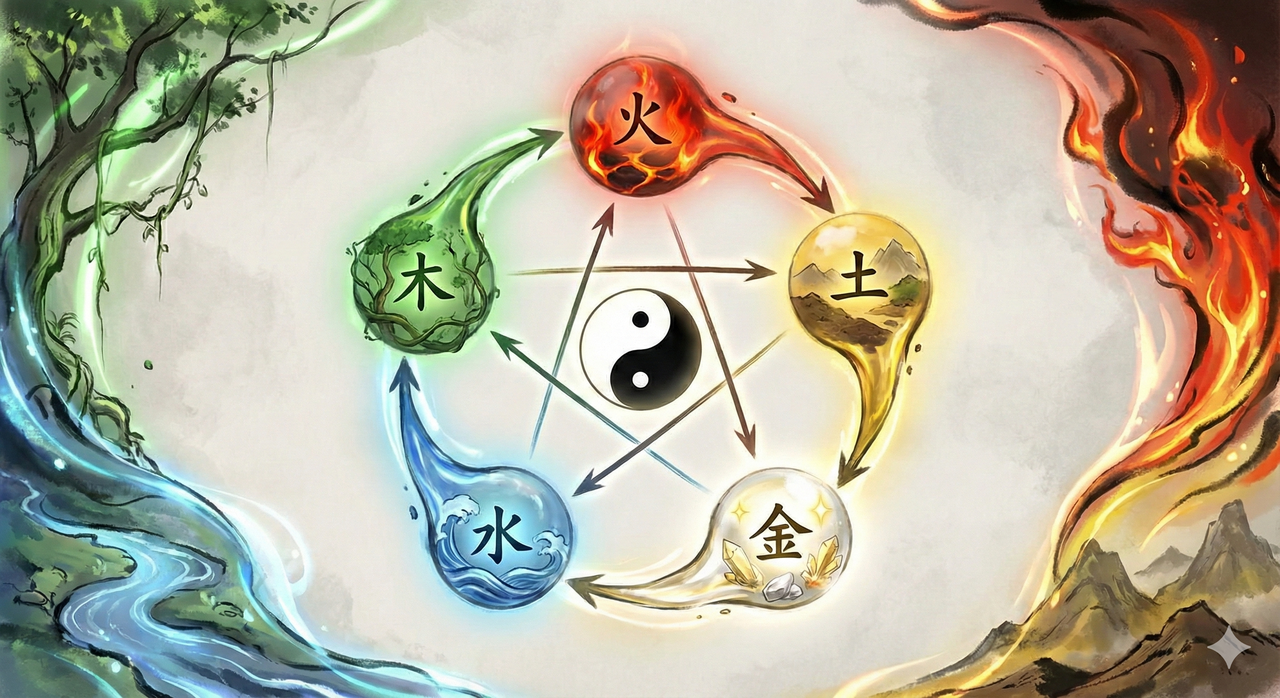
When most people hear "Wu Xing" (五行), their minds conjure images from martial arts films: Metal, Wood, Water, Fire, and Earth swirling as glowing magical elements, clashing and intertwining like sorcery. It's a romantic vision, visually stunning—but tragically, the more romantic something appears, the further it strays from truth.
Unless we trace Wu Xing back to its origins—that primitive era of slash-and-burn agriculture and nascent civilization—we cannot grasp the foundational logic of Chinese culture.
Today, we strip away the mystique.
Wu Xing was never about five substances. It represents five essential operational states that our ancestors distilled from millennia of agricultural survival.
Why "Xing" (Movement), Not "Su" (Substance)?
The earliest mention of Wu Xing appears in the Book of Documents (尚书·甘誓), but the Hong Fan chapter provides the definitive framework. This precious historical document doesn't merely list the five—it offers their "personality profiles":
"First is Water, second Fire, third Wood, fourth Metal, fifth Earth. Water flows downward and moistens; Fire blazes upward; Wood bends and straightens; Metal yields and transforms; Earth receives planting and harvesting."
Note the language. If these were meant to be physical elements, why didn't the ancients simply call them "Wu Su" (Five Substances)?
The character "行" (xíng) inherently signifies movement, action, and states of being.
In that embryonic age of civilization—before writing systems, calendars, or mythology crystallized—our ancestors cared about only two things:
- Don't starve (master agriculture)
- Stay alive (ensure survival)
They observed nature for thousands of years and finally distilled five operational states most critical to staying alive.
The Original Encoding of Five States
Let us set aside the later overlays of medicine and divination. Return to the Neolithic. See these five states through our ancestors' unadorned eyes:
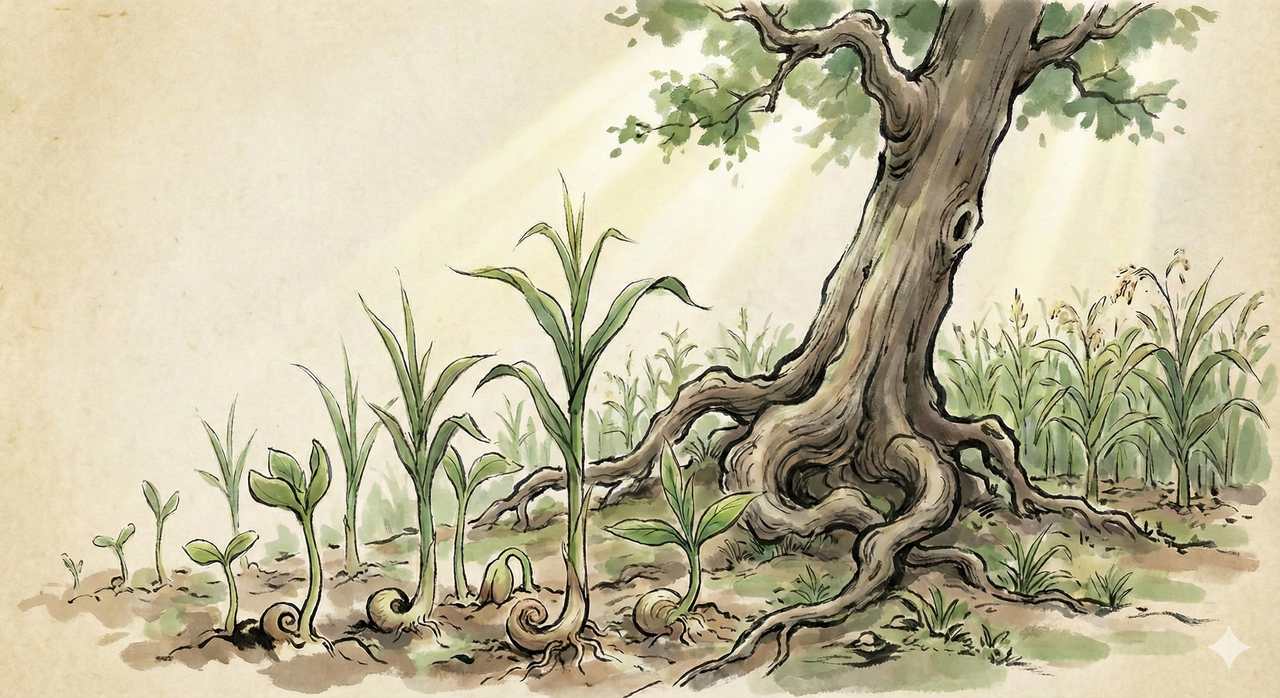
Wood: The Will to Grow (曲直)
This isn't merely about timber. It describes the upward-striving state of plants and crops.
Whether trees or grain, they begin curled and fragile, yet maintain an unyielding, upward posture—never downward. This state of "bending yet straightening" (曲直) embodies life's vital surge.
Fire: The Ascent of Energy (炎上)
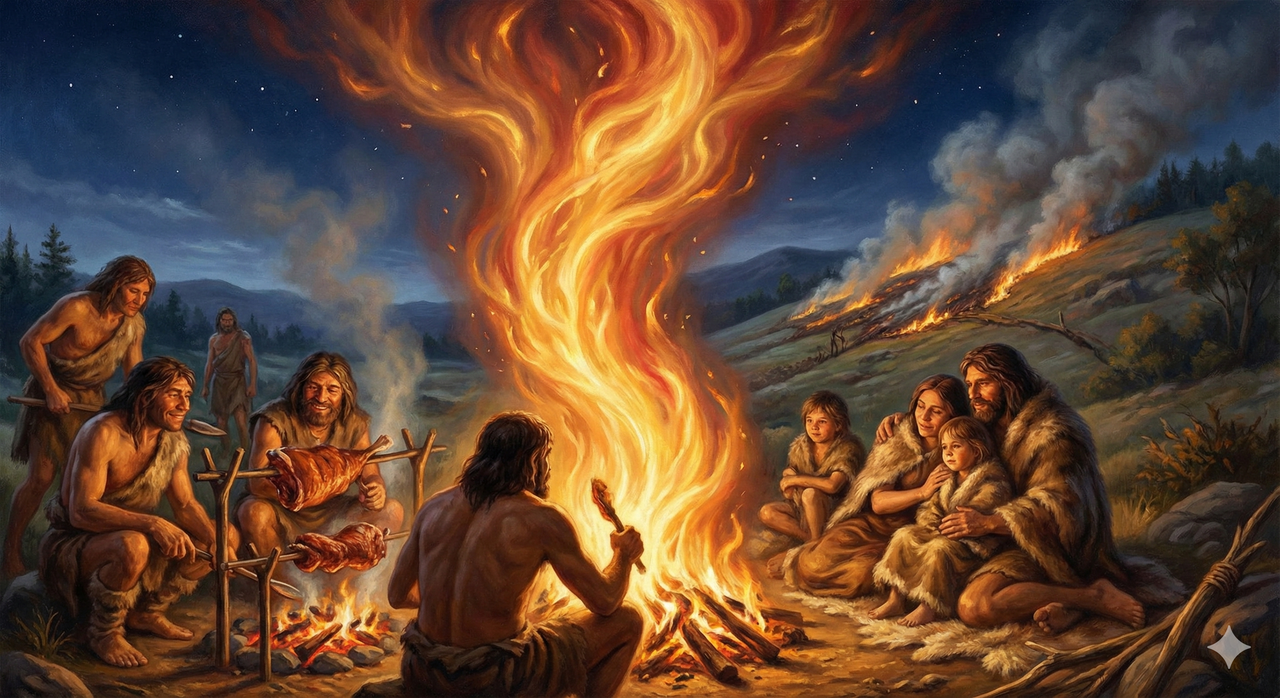
Fire isn't merely combustion. It represents the state of providing warmth, light, and energy—the "blazing upward" (炎上).
This state brought cooked food, ending the era of raw consumption. It brought heat, dispelling cold. Crucially, in the age of slash-and-burn farming, it transformed vegetation into ash, enriching the soil.
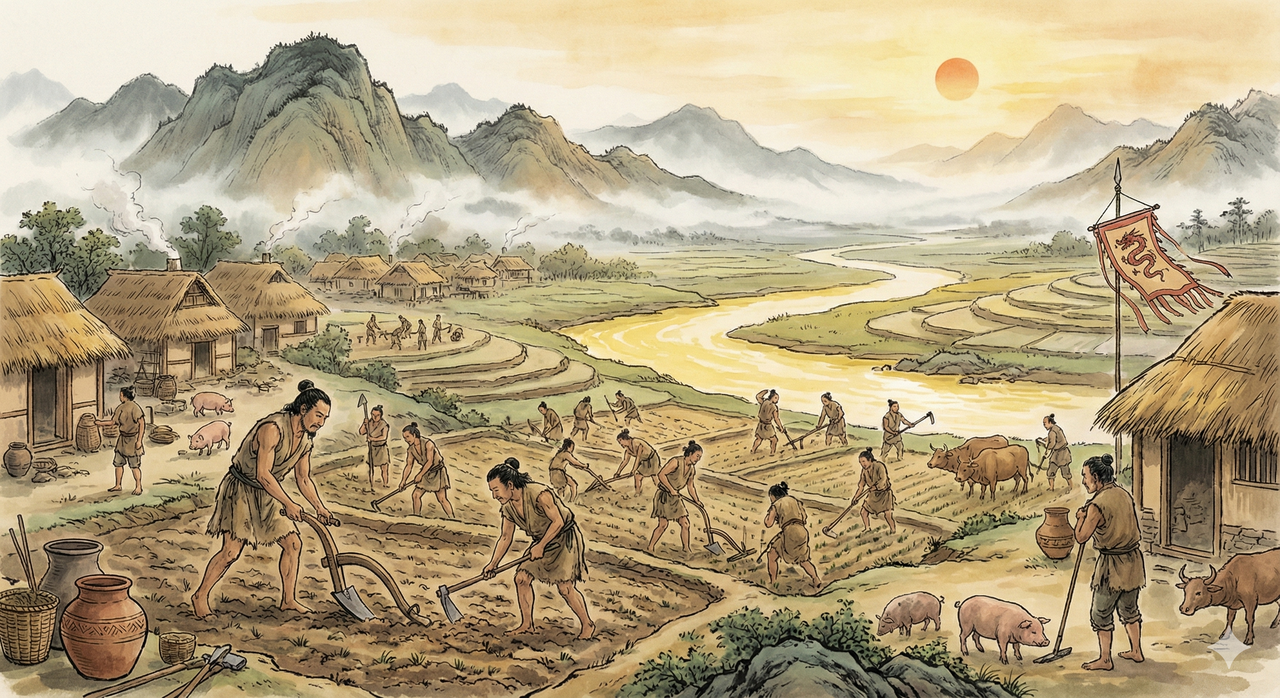
Earth: The Foundation of Survival (稼穑)
Earth isn't dirt. It signifies the state of agricultural activity—jia se (稼穑).
"Jia" (稼) means planting; "se" (穑) means harvesting. This is the bedrock upon which agrarian civilization stands. Earth exists to support "bending and straightening" (crop growth), to bear all things.
Metal: Transformation and Shaping (从革)
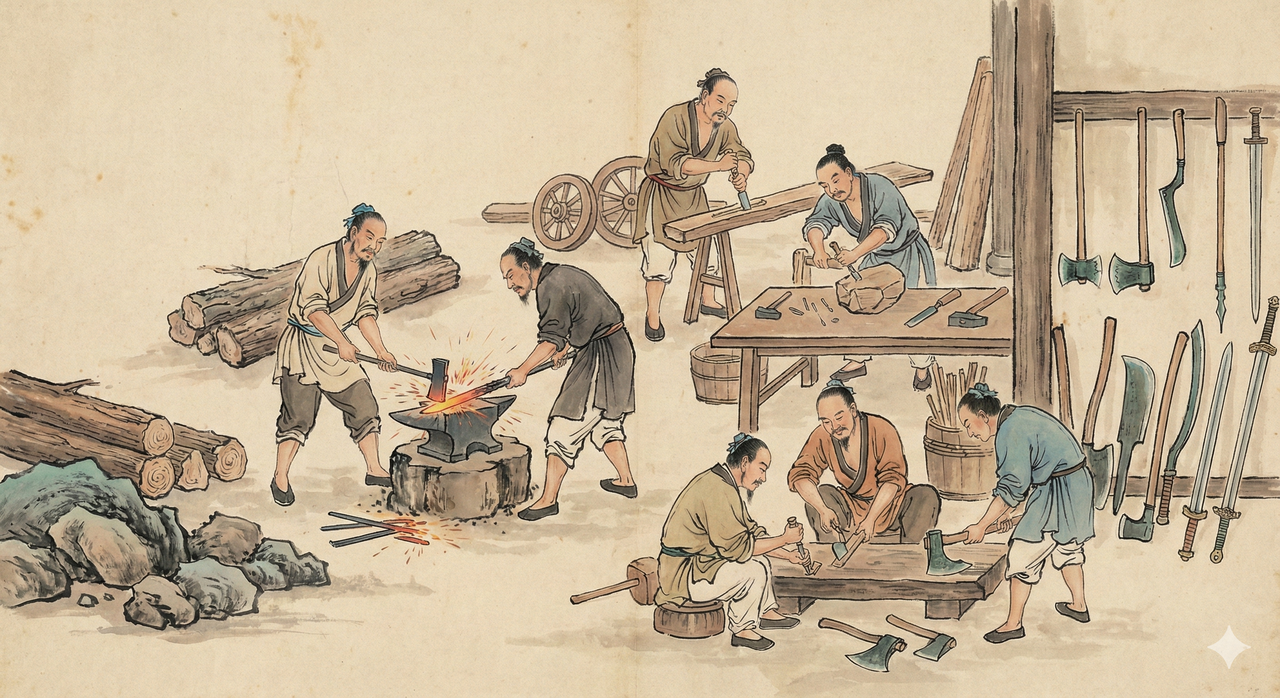
This is the most misunderstood concept. Metal isn't a metallic block. It represents the state of "yielding and transforming" (从革)—conforming to need, changing shape.
Nature's raw materials (trees, stones) must be worked, shaped, and refined by human hands to become tools (blades, axes, hoes). This capacity for "transformation" is Metal's essence.
Water: Nourishment and Permeation (润下)
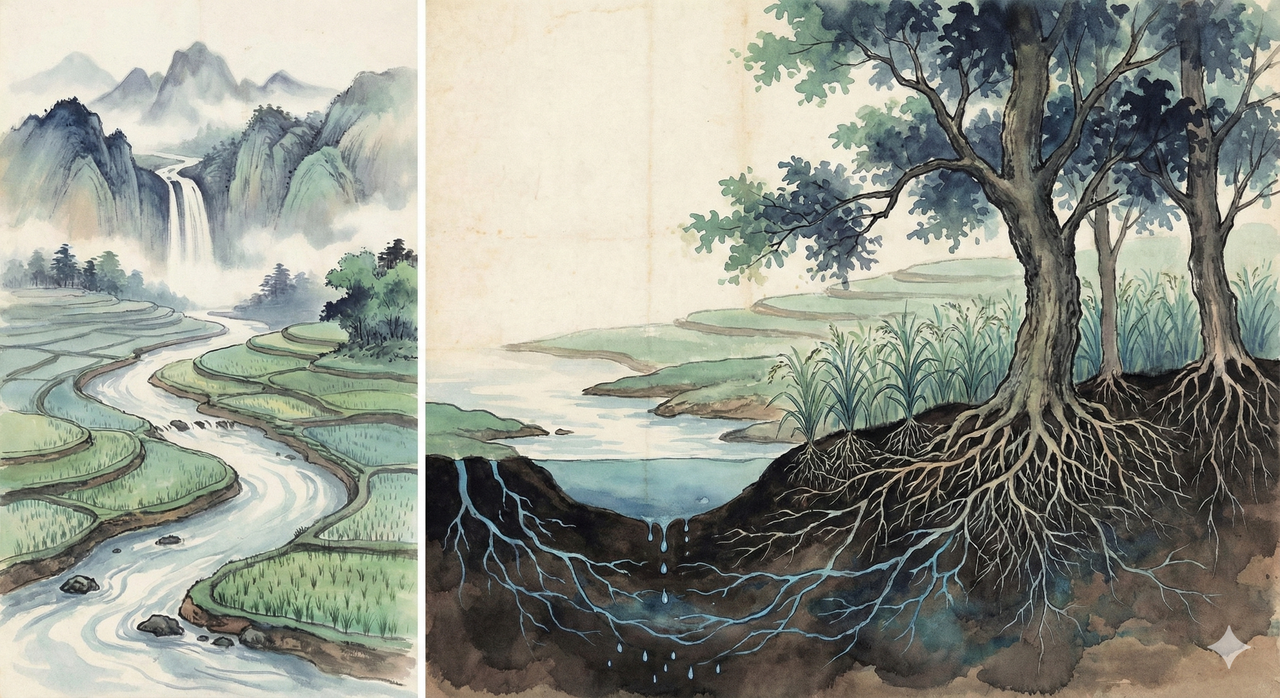
Water isn't merely liquid. It represents the state of "moistening downward" (润下).
It always flows from high to low, seeping into soil crevices, nourishing roots. Water achieves this "moistening downward" through ultimate adaptability—winding through rivers, still in cups, vanishing formlessly into earth.
The Generating and Controlling Cycles: An Agricultural Feedback Loop
Once you understand these five states, the so-called "generating and controlling cycles" (相生相克) cease to be mysticism. They become rigorous agricultural logic.
People commonly misread "generating" (生) as "a mother birthing a child." In Wu Xing, "generating" functions more like "technical support" or "prerequisite enablement." And "controlling" (克) isn't destruction—it's "regulation" and "shaping."
Why Does Metal Generate Water?
Some masters explain this as "metal condensing moisture" or "metal liquefying"—forcing later physics onto ancient wisdom.
Return to the original logic: For Water to achieve "moistening downward" and nourish all things, it must freely change shape (entering soil, flowing through channels). "Yielding and transforming" (Metal's capacity for shape-change) provides the foundational support for "moistening downward" (Water's nourishing action).
Without Metal's attribute of "yielding and transforming," water becomes stagnant, unable to nurture life.
Why Does Water Generate Wood?
The "moistening downward" state (Water) nourishes the soil, creating necessary conditions for the "bending and straightening" state (crop growth). A natural relay.
Why Does Wood Generate Fire?
When plants achieve the tall, upward state of "bending and straightening," they attract lightning (heaven's fire). In agriculture, abundant vegetation provides fuel for "blazing upward."
Why Does Fire Generate Earth?
This captures slash-and-burn farming: "Unburned mountains yield infertile land."
The "blazing upward" state reduces vegetation to ash and fertilizer, directly enriching soil fertility, ensuring smooth "planting and harvesting" (agricultural activity). Fire buffs Earth.
Why Does Earth Generate Metal?
Without "planting and harvesting" (agricultural activity), humans wouldn't need complex tools. Precisely because they had to farm, to survive, our ancestors learned to shape stone and smelt metal.
Agricultural activity directly catalyzed and inspired the skill of "yielding and transforming" (toolmaking). Without Earth, no Metal.
The Necessity of Control
- Metal Controls Wood: This isn't harmful. Crops (Wood) growing wildly need pruning; at maturity, they need harvesting. The force of "yielding and transforming" (Metal/tools) must intervene in the "bending and straightening" state. Without Metal controlling Wood, no harvest.
- Wood Controls Earth: For crops to grow, they must break through soil. This expresses life force.
- Earth Controls Water: This isn't simply "water comes, earth blocks." For agriculture, our ancestors had to master water control. Without building ridges and dikes (Earth), water would "moisten downward" everywhere chaotically, potentially flooding.
- Water Controls Fire: The "moistening downward" state (cool moisture) naturally balances the "blazing upward" state (heat and combustion). Though fire brings cooked food and fertilizer, unchecked fire brings destruction.
- Fire Controls Metal: Whether transforming stone into blades or later metal into hoes—doesn't this typically require high temperature ("blazing upward")? Only through "blazing upward's" intense heat can stubborn materials yield, better achieving "yielding and transforming."
Pragmatism at Its Purest
From observing these five states with naked eyes (phase one), to recording them in writing (phase two), to distilling philosophical principles (phase three)—our ancestors completed a magnificent cognitive cycle.
See it clearly now?
Wu Xing was never some secret scripture discovered by immortals in caves, nor high technology transmitted by aliens.
It was our ancestors, faces to the yellow earth, backs to the sky, fighting tooth and nail with heaven itself just to eat and survive—wresting five survival principles from nature.
- The transformation of Qi into Yin and Yang—that's heaven's domain.
- The operation of Wu Xing—that's earth's domain.
- Using Wu Xing to farm and survive—that's humanity's domain.
This is Heaven, Earth, and Humanity. The Three give birth to all things.
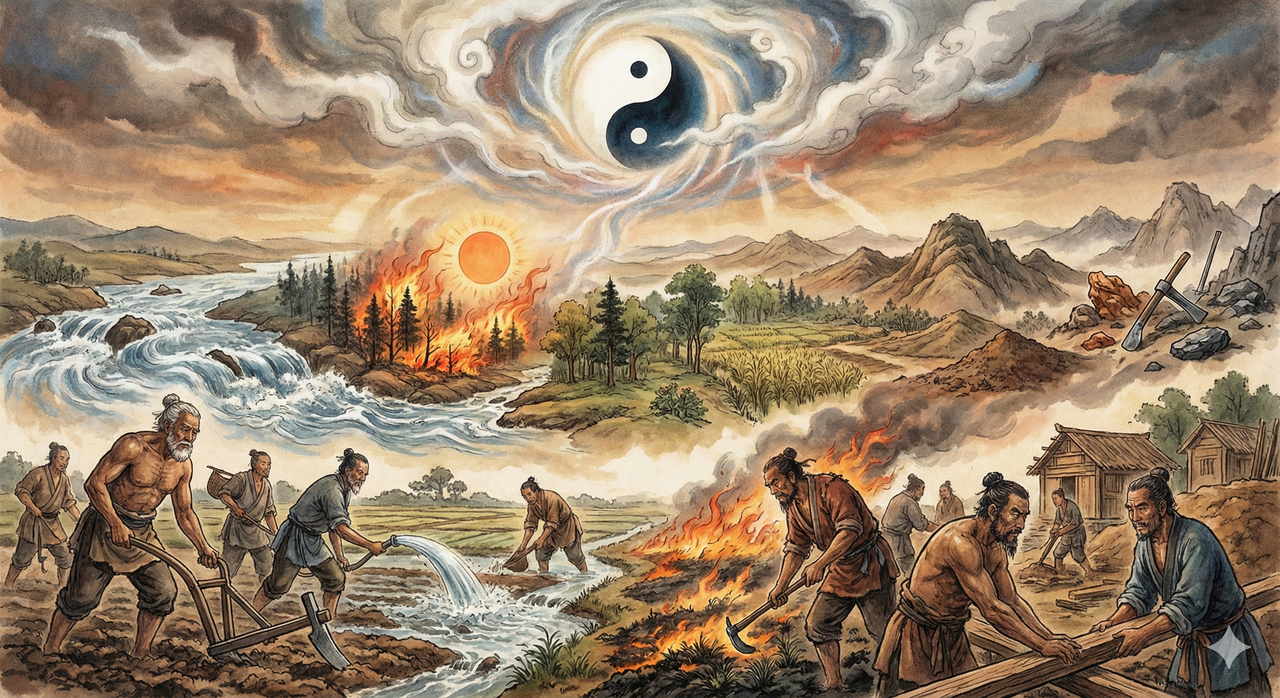
Though this truth sounds anything but romantic—perhaps even "earthy"—it was precisely this extreme pragmatism that allowed Chinese civilization to endure, solidly and substantively, through millennia of storms.
Next time someone tells you Wu Xing is about magical elements, you can calmly reply: "Friend, those are actually our ancestors' farming notes."
Afterword
This series aims to clarify the underlying logic of Chinese metaphysics, helping readers understand the culture embedded within—our own culture.
Metaphysics isn't mysterious at all. It's simply the highly distilled experience our ancestors extracted from observing the patterns of reality.
Content inspired by Bilibili creator: @初十的宝可梦
All illustrations by artist: Gemini3 Pro
Share freely; commercial use prohibited.